
What Did RBI Announce?
The Reserve Bank of India (RBI) issued a new circular tightening lending norms for banks when they provide funds to stock brokers.
These rules will come into effect from 1 April 2026.
While it may sound technical, the impact is very practical — especially for brokerage firms that rely on funding to support trading activity.
What Are the Key Changes?
Here’s what the RBI circular includes:
1️⃣ 100% Collateral Requirement
Banks must now ensure full collateral coverage when lending to brokers.
2️⃣ No Bank Funding for Proprietary Trading
Brokers will not be allowed to use bank funds for their own trading activities.
3️⃣ Minimum 40% Haircut on Equity Collateral
If shares are used as collateral, banks must apply at least a 40% haircut — meaning brokers can borrow much less against the same assets.
4️⃣ Stricter Risk & Exposure Limits
Banks must monitor risk more tightly and limit their exposure to capital markets.
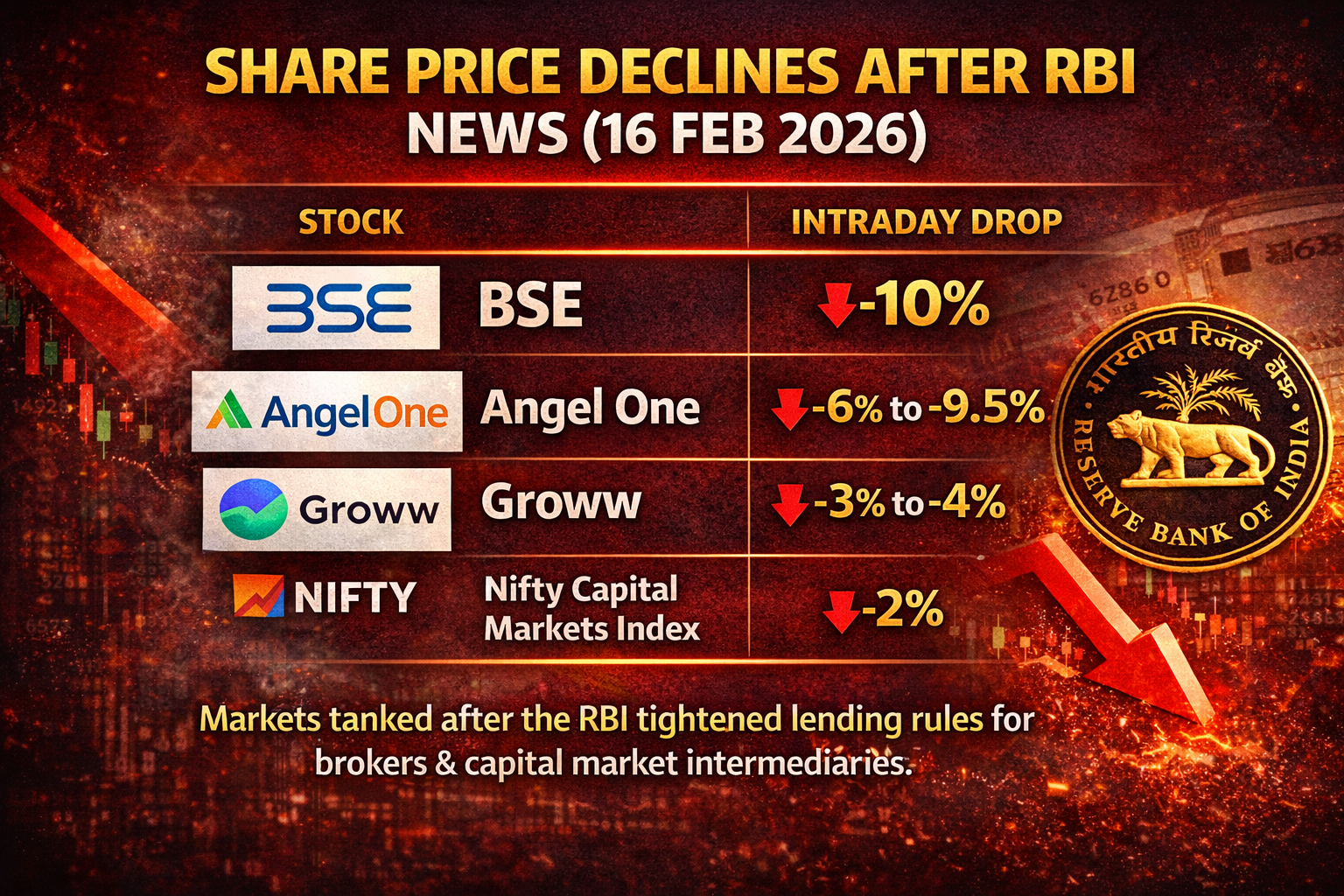
Why Did BSE, Angel One & Groww Shares Fall?
The stock market reacts to future expectations, not just present reality.
Here’s why investors got nervous:
🔺 Higher Funding Costs
If brokers have to provide more collateral, their cost of funds rises.
🔻 Possible Slowdown in Derivatives Trading
Less leverage means lower trading activity, especially in F&O segments.
📉 Lower Trading Volumes = Lower Revenue?
Brokerage firms earn from transaction volumes. If trading slows down, revenues may get impacted.
So, when growth expectations are reset, stock prices adjust quickly.
Is This a Temporary Reaction or a Long-Term Shift?
This is the big question.
Short-Term Impact:
Sentiment-driven selling
Fear of reduced trading volumes
Pressure on brokerage stocks
Long-Term View:
Stronger financial discipline
Lower systemic risk
More stable capital markets
Regulatory tightening is not new. In fact, India’s financial markets have become stronger over time because of stricter oversight.
Should Investors Be Worried?
If you are:
🔹 A Trader
Expect volatility in brokerage stocks.
🔹 A Long-Term Investor
Focus on business fundamentals:
Client growth
Market share
Technology advantage
Cost structure
Regulatory changes often create short-term pain but long-term stability.
Final Thoughts
The RBI circular does not mean brokerage companies are in trouble.
It simply means:
Less easy leverage
Higher scrutiny
More disciplined growth
Markets hate uncertainty — and that’s why we saw the fall.
But once clarity improves, prices usually stabilize.
Frequently Searched Questions
Why did BSE stock fall today?
Because RBI tightened lending rules for brokers, impacting future growth expectations.
What is RBI’s new rule for stock brokers?
Banks must provide loans only with 100% collateral, no funding for proprietary trading, and apply higher haircuts on equity collateral.
Will brokerage stocks recover?
That depends on how trading volumes and profitability adjust under the new norms.
If you found this useful, keep visiting Balanced Figure for simple, no-noise finance explanations.
Stay informed. Stay ahead. 📊