
Introduction: When One Headline Shakes a Portfolio
You open your stock app in the morning.
Red numbers everywhere.
Adani stocks are falling—again.
News alerts mention the US SEC, summons, and billions wiped out.
If you’re an investor, or even someone casually following the markets, the first reaction is simple:
“What’s going on now—and should I be worried?”
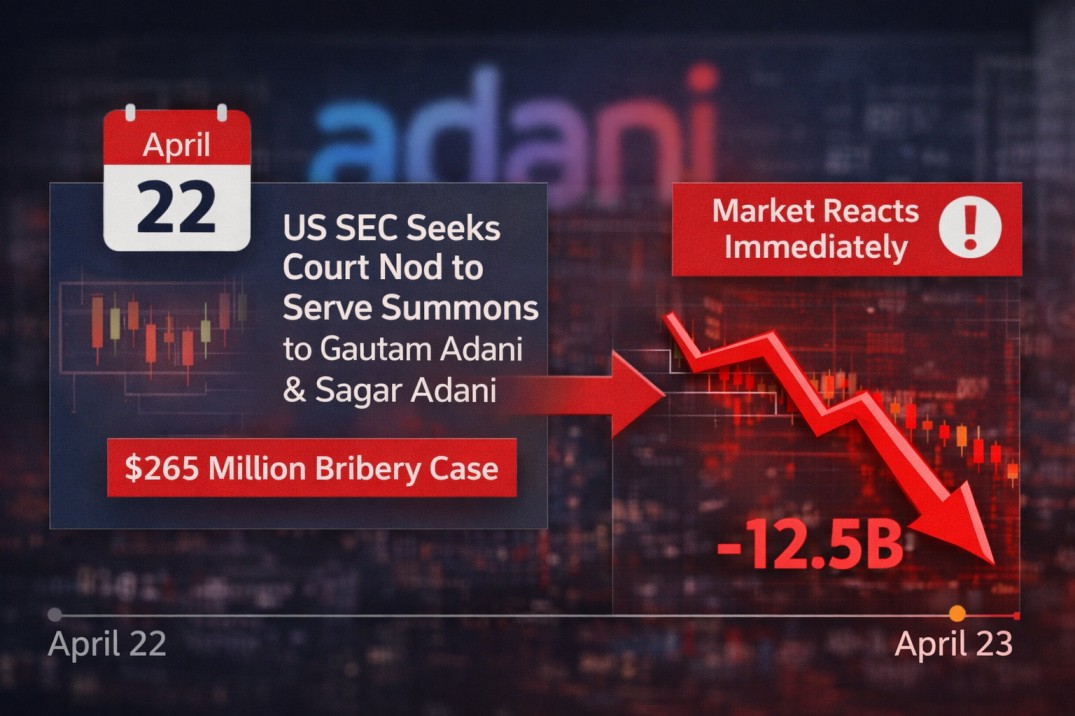
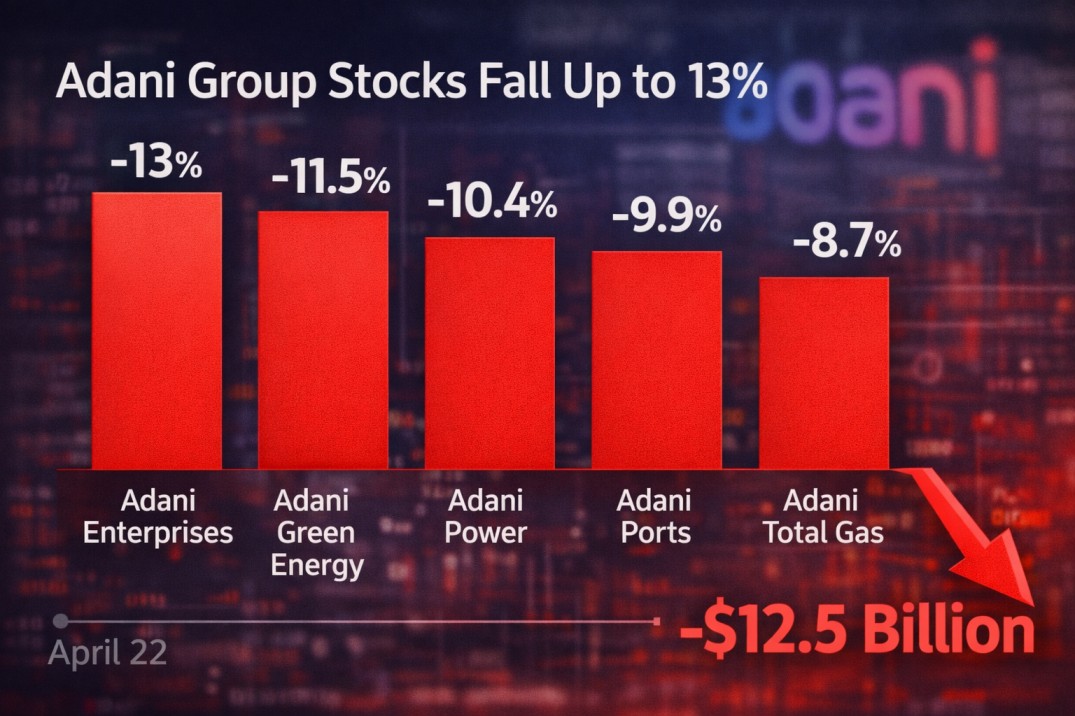
In just one trading session, Adani Group stocks lost nearly $12.5 billion in market value, with some shares falling as much as 13%. The trigger wasn’t earnings, debt, or oil prices—but a legal development in the United States.
This article breaks it all down:
What actually happened (without legal jargon)
Why markets reacted so sharply
What it means for Indian investors
And how to think about Adani stocks going forward
Context & Background: What Triggered the Fall?
The Simple Version
The US Securities and Exchange Commission (SEC) asked a US court for permission to serve legal summons via email to Gautam Adani and Sagar Adani.
This request is linked to an ongoing civil case involving allegations of fraud and a $265 million bribery scheme related to overseas investments and disclosures.
The moment this news broke, markets reacted.
Why This Was a Big Deal
Normally, serving summons is routine.
But this case stood out because:
The SEC claimed it faced difficulty serving notices through official government channels
Seeking court approval to serve summons via email is unusual
Investors saw this as a legal escalation, not just background noise
Markets don’t wait for verdicts.
They react to uncertainty.
What Happened in the Stock Market?
The Numbers at a Glance
Total market cap wiped out: ~$12.5 billion
Worst-hit stocks:
Adani Enterprises
Adani Green Energy
Adani Power
Adani Total Gas
Adani Ports
Intraday fall: Shares slide up to 13% in some companies
Broader Market Reaction
The Indian stock market reaction was cautious:
Nifty and Sensex slipped modestly
Selling pressure was mostly Adani-specific
Banking and IT stocks were relatively stable
This tells us something important:
👉 The market saw this as a company-level risk, not a systemic crisis.
Deep Explanation: Why Legal News Hits Stocks So Hard
1. Markets Hate Uncertainty More Than Bad News
A confirmed fine is bad—but predictable.
An ongoing legal process is worse—because no one knows the end.
Investors start asking:
Will there be penalties?
Could this affect overseas funding?
Will global institutions reduce exposure?
Even without answers, prices move.
2. Global Investors Are Extra Sensitive
Many Adani companies rely on:
Foreign institutional investors (FIIs)
Overseas bonds and dollar funding
Global ESG-linked capital
When a US regulator is involved, global funds don’t wait.
They rebalance first, analyze later.
3. Memory of the Past Still Lingers
Let’s be honest.
After the 2023 short-seller episode, Adani stocks carry a reputation risk premium.
Any fresh controversy—legal or regulatory—gets amplified.
This doesn’t mean guilt.
It means lower tolerance for uncertainty.
The Alleged $265 Million Bribery Case: What We Know
Here’s what’s important—and what’s not.
What Matters
It is a civil case, not a criminal conviction
Allegations relate to disclosures and overseas dealings
Adani Group has denied the allegations and said it will contest them
What Does NOT Matter (Yet)
No final judgment
No fines announced
No business operations halted
Markets reacted to the process, not the outcome.
How This Affects Common Investors (Not Just Traders)
If You Hold Adani Stocks
Ask yourself:
Is this a short-term trade or long-term holding?
Can you tolerate volatility?
Does Adani exceed your comfort allocation?
If your exposure is small and long-term, this may just be noise.
If You’re a New Investor
This episode is a lesson:
Concentrated bets = higher emotional stress
News risk is real, even for large groups
Diversification isn’t boring—it’s protective
👉 Read our Beginner Guide:
Internal Link: “How Stock Market News Impacts Share Prices (Beginner Guide)”
Data & Expert Insight
What Analysts Are Saying
Fundamentals of core businesses haven’t changed overnight
Legal overhang can cap stock rallies in the near term
Long-term outlook depends on:
Legal resolution
Balance sheet discipline
Execution consistency
Translation:
Business ≠ Stock price in the short term
Pros, Cons & Risks: A Balanced View
👍 Positives
Strong infrastructure assets
Revenue-generating core businesses
Government-linked sectors (ports, power, logistics)
⚠️ Risks
Legal uncertainty abroad
Sentiment-driven volatility
Higher scrutiny from global investors
❌ Cons
Sharp price swings
Repeated headline risk
Trust rebuilding takes time
What Should Investors Do Now?
For Conservative Investors
Avoid overexposure
Stick to diversified funds
Don’t chase rebounds
For Long-Term Investors
Track legal developments calmly
Focus on quarterly performance
Avoid panic selling on headlines
For Beginners
Learn from this case
Understand risk beyond numbers
Build discipline before conviction
👉 Related Article:
Internal Link: “Why Big Stocks Fall on Legal News Even When Profits Are Stable”
Future Outlook: What Happens Next?
Short Term (Next Few Weeks)
Volatility likely
News-driven price movement
Range-bound trading
Long Term (1–3 Years)
Outcome depends on:
Legal clarity
Cash flow stability
Investor trust rebuilding
Adani stocks won’t disappear.
But they may take time to regain confidence-driven premiums.
Conclusion: Stay Calm, Stay Informed
Stock markets don’t reward panic.
They reward patience, clarity, and perspective.
This episode isn’t about instant conclusions—it’s about understanding how markets process uncertainty.
Read headlines.
But decide with your head, not your heart.
FAQ Section
1. Why did Adani Group stocks fall sharply today?
Due to news that the US SEC sought court approval to serve legal summons, increasing uncertainty for investors.
2. How much market value did Adani Group lose?
Around $12.5 billion in combined market capitalization in one session.
3. Is this a criminal case against Adani?
No. It is a civil case, and no final judgment has been made.
4. Should retail investors panic sell?
Panic selling usually locks in losses. Decisions should depend on risk tolerance and time horizon.
5. Does this affect the Indian stock market overall?
Not significantly. The impact was largely limited to Adani Group stocks.
6. Are Adani businesses in trouble?
Operations continue normally. The issue is legal and sentiment-related, not operational.