
The Indian stock market surprised investors on Monday as the Sensex staged a sharp comeback, erasing nearly 700 points of losses within just one hour of trade. What began as a nervous, weak opening quickly turned into a strong recovery, leaving traders and investors asking one key question:
Was this sudden turnaround driven by a Trump-related global signal, or was it simply short covering?
Let’s break it down in simple terms.
📉 What Happened in the Morning?
Markets opened on a cautious note due to:
Weak global cues
Fresh concerns around US trade policy and tariffs
Nervous sentiment across Asian markets
Both the Sensex and Nifty slipped sharply in early trade as investors reacted to uncertainty around global politics and slowing international growth.
🔄 The Sudden Turnaround: 700 Points in an Hour
Around mid-session, the mood changed dramatically:
Heavy selling slowed down
Buying emerged in large-cap stocks
Banking, IT, and metal stocks led the rebound
Within an hour, the Sensex recovered nearly all its losses, stunning market participants.
🇺🇸 The Trump Factor: Did Global Signals Calm Markets?
One possible reason behind the rebound was fresh optimism coming from the US side.
Market participants reacted to reports suggesting:
A softer tone from the US on tariffs
Signals of diplomatic engagement rather than aggressive trade action
Reduced fear of immediate escalation in global trade tensions
For global markets, even a hint of stability from the US — especially involving Donald Trump-related trade rhetoric — is often enough to calm nerves. Indian markets, being closely linked to global flows, responded quickly.
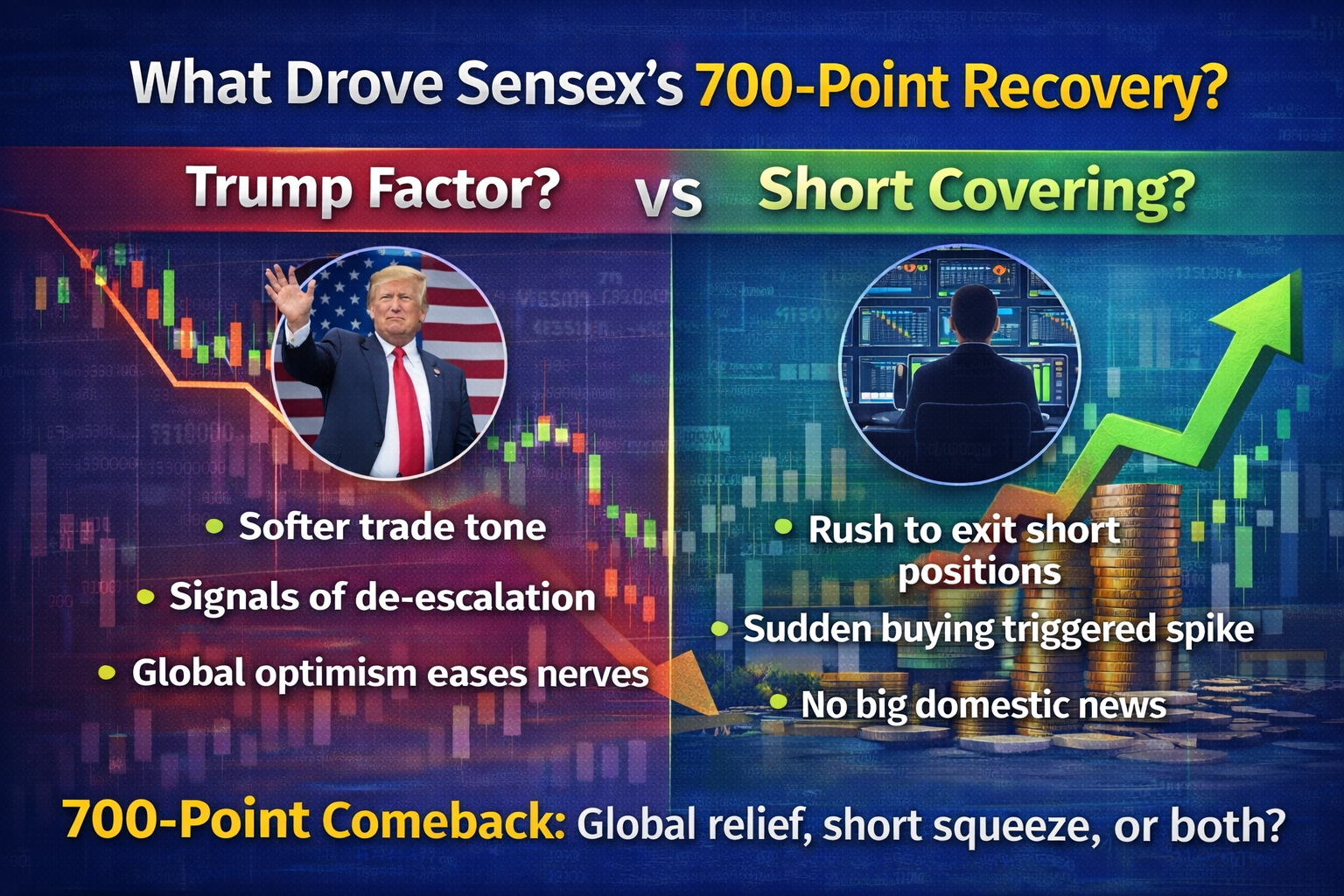
🔁 Or Was It Just Short Covering?
Another strong explanation is short covering.
What is short covering?
Traders who bet on markets falling (short sellers) rush to buy shares when prices stop falling
This sudden buying pushes markets up sharply
Signs pointing to short covering:
Recovery happened very fast
No major domestic news triggered the rally
Volumes spiked during the rebound
In simple words, traders who expected more downside were forced to exit their positions, fueling the sharp upside move.
📊 Which Sectors Led the Recovery?
The rebound was broad-based, but key support came from:
Banking stocks – helped stabilize the index
IT stocks – benefited from easing global concerns
Metal stocks – bounced back after early selling
Mid-cap and small-cap stocks, however, remained more cautious, suggesting investors are still selective.
🧠 What This Move Really Tells Us
This sudden comeback highlights a few important realities of the current market:
Sentiment is fragile and headline-driven
Global cues matter more than local news in the short term
Volatility is likely to stay high
Quick intraday reversals are becoming common
Markets are not fully confident yet — they are reacting fast to every signal, positive or negative.
📌 What Should Investors Do Now?
For long-term investors:
Avoid reacting to hourly market moves
Focus on fundamentals, earnings, and valuations
Use volatility to accumulate quality stocks gradually
For traders:
Be cautious with aggressive positions
Keep strict stop-losses
Expect sharp swings in both directions
🔮 Final Takeaway
The Sensex’s 700-point recovery was likely driven by a mix of short covering and temporary relief from global signals, rather than a strong, lasting trigger.
Whether it was the Trump factor or trader positioning, one thing is clear:
👉 Markets are nervous, reactive, and extremely sensitive right now.
In such an environment, patience matters more than prediction.