Why This Matters in Real Life
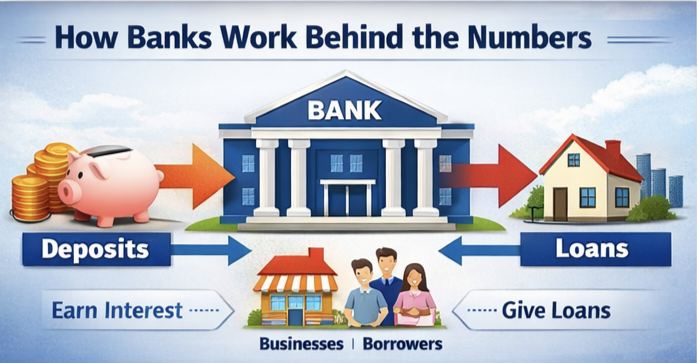
HDFC Bank isn’t just another listed company. It’s where millions of Indians keep their savings, take home loans, car loans, and business loans. When a bank of this size reports results, it tells us something about:
How healthy lending is in India
Whether borrowers are repaying on time
How stable the banking system feels right now
So even if you don’t own the stock, this update still matters.
The Headline Numbers (Simple Version)
Here are the main figures from the quarter:
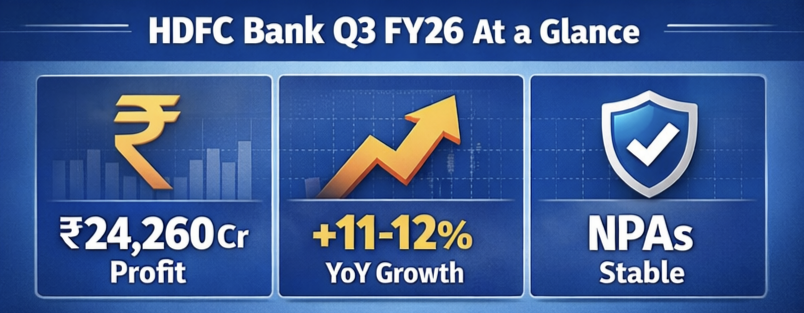
Net profit: around ₹24,260 crore
Year-on-year growth: roughly 11–12% higher than last year’s same quarter
Bad loans (NPAs): largely unchanged and under control
Loan growth: steady, not aggressive
Deposit growth: slower than loans, but stable
In short:
The bank earned more money than last year and did not see a spike in problem loans.
What These Numbers Actually Mean
1. Profit Growth: Not Explosive, But Reliable
An 11–12% profit increase means the bank is growing, but not taking wild risks to do so.
Think of it like a shop owner:
Sales are higher than last year
Expenses have increased too
But the final savings are still better than before
That’s what’s happening here.
2. Asset Quality: No New Trouble Signals
One of the most important numbers for banks is bad loans — money that borrowers are not repaying.
This quarter:
Gross and net NPAs stayed almost flat
No sudden jump in defaults
That tells us borrowers — individuals and companies — are still managing repayments reasonably well.
This is especially important in a high-interest-rate environment.
3. Loans vs Deposits Gap (A Quiet Issue)
Behind the scenes, one thing banks are watching closely is this:
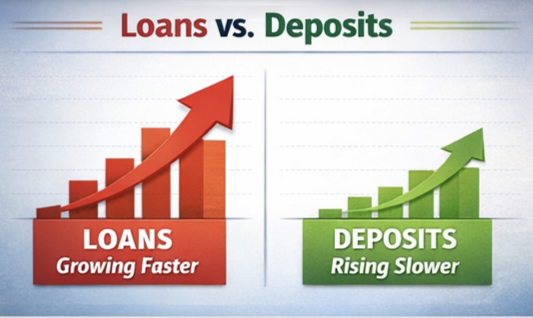
Loans are growing faster than deposits
That’s not dangerous immediately, but it does mean banks need to:
Compete harder for deposits
Pay slightly higher interest to savers
This can pressure margins in future quarters if it continues.
What Changed Compared to Last Year?
Let’s put this in perspective:
Last year’s Q3 profit was roughly ₹21,700–22,000 crore
This year it’s crossed ₹24,000 crore
That’s a solid absolute increase of over ₹2,000 crore in one year
However:
Growth is slower than the post-merger excitement phase
Costs are higher
Competition for deposits is intense
So this is maturity-phase growth, not a boom phase.
How This May Affect Normal People
If You’re a Saver
No immediate change in savings account rules
Deposit competition may slowly improve rates over time
If You Have a Loan
No sudden rate cuts or hikes from this result alone
Stable bank performance means no panic tightening of lending
If You’re an Investor
These numbers signal stability, not surprise
Markets usually react calmly to such results unless expectations were very different
Things People Should NOT Panic About
❌ Profit growth is “only” 11% → that’s still strong for a large bank
❌ Deposits slower than loans → manageable, not a crisis
❌ No big jump in NPAs → actually a positive sign
This is not a stress result. It’s also not a blockbuster result. It sits comfortably in between.
The Bigger Picture
India’s banking system right now is in a phase where:
Growth is steady
Risks are watched closely
Regulators are strict
Banks are cautious but active
HDFC Bank’s Q3 numbers fit neatly into that story.
Calm Takeaway
HDFC Bank’s Q3 FY26 results show:
Profit is growing at a healthy pace
Loan quality is stable
No hidden shock in the balance sheet
The bank is operating in control, not overconfidence
For customers, life goes on normally.
For investors, this is a signal of steadiness, not drama.
And sometimes, in banking, boring stability is actually good news.